

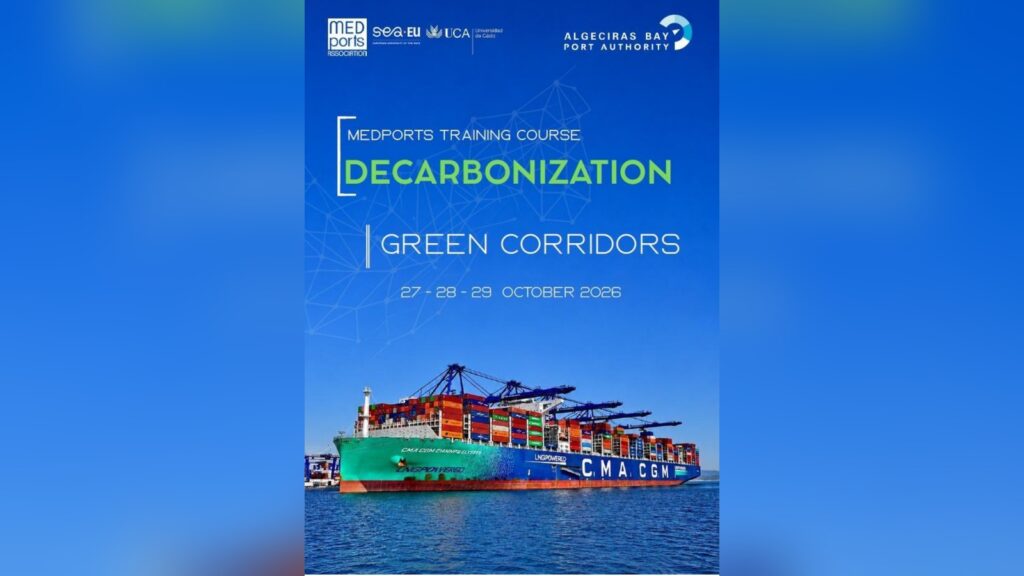
28 October 2026. Algeciras, Spain.
In the framework of the 2nd MEDPorts Training Course on Decarbonization and Green Corridors, taking place from 27 to 29 October 2026 in Algeciras, Spain, the UNCTAD TrainForTrade team delivers a Port Endeavor session. The session aims to raise awareness of the United Nations Sustainable Development Goals (SDGs) and their integration into decision-making and sustainable port management.
The course, sponsored by the MEDPorts Association, is organized by the SEA-EU Alliance (European University of the Seas), through the University of Cádiz, in collaboration with the Algeciras Bay Port Authority. It seeks to equip the maritime and port sector with the technical, strategic and institutional capabilities required to develop viable and scalable green shipping corridors. Over three days, international experts from the public and private sectors address the regulatory frameworks of the International Maritime Organization (IMO), the European Union’s Global Gateway strategy, alternative fuels and bunkering strategies, as well as port-to-port cooperation.
Port Endeavor
Port Endeavor is a role-playing game resulting from the collaboration between UNCTAD TrainForTrade, the International Association of Ports and Harbors (IAPH) and the Port of Antwerp-Bruges. Drawing on port projects and best practices, it places teams in the role of a port facing current challenges and disruptive events, encouraging them to assess the impact of their decisions on the SDGs. The game helps accelerate the adoption of the SDGs in port communities and turn port professionals into SDG ambassadors, while fostering the exchange of experiences and the search for solutions for more resilient ports.
The TrainForTrade Port Management Programme
The UNCTAD TrainForTrade Port Management Programme (PMP) supports port communities in developing countries in delivering more efficient and competitive port management in the future. In order to increase trade flows and foster economic development, the programme creates port networks bringing together public, private, and international entities. The aim is to share knowledge and expertise between port operators and strengthen talent management and human resources development in port communities.
The PMP’s main objectives
- Strengthen institutional capacity and management efficiency of ports and related agencies.
- Promote port community participation and public-private partnerships.
- Enhance the competitiveness of ports and the quality of their services.
- Improve the environmental sustainability and social responsibility of ports.
The PMP provides technical assistance in various areas, including port planning, management and operations, logistics and supply chain management, port security, safety and environmental protection, and legal and regulatory frameworks. It also organizes training courses, workshops, and seminars, as well as conducts research and analysis on port-related issues.