Future-ready ports must be green, digital and resilient. They connect not only to ships and cargo, but also to energy systems, cities, industries, technology and people. As energy hubs, they can produce, store, distribute and consume clean energy – not merely consume it.
Investing in digitalization and the energy transition is no longer optional for ports – it is essential. Because fleet modernization and port readiness are interconnected, failing to invest in both could undermine a port’s resilience and competitiveness.
“Policies should not regulate the transition. They should enable it.”
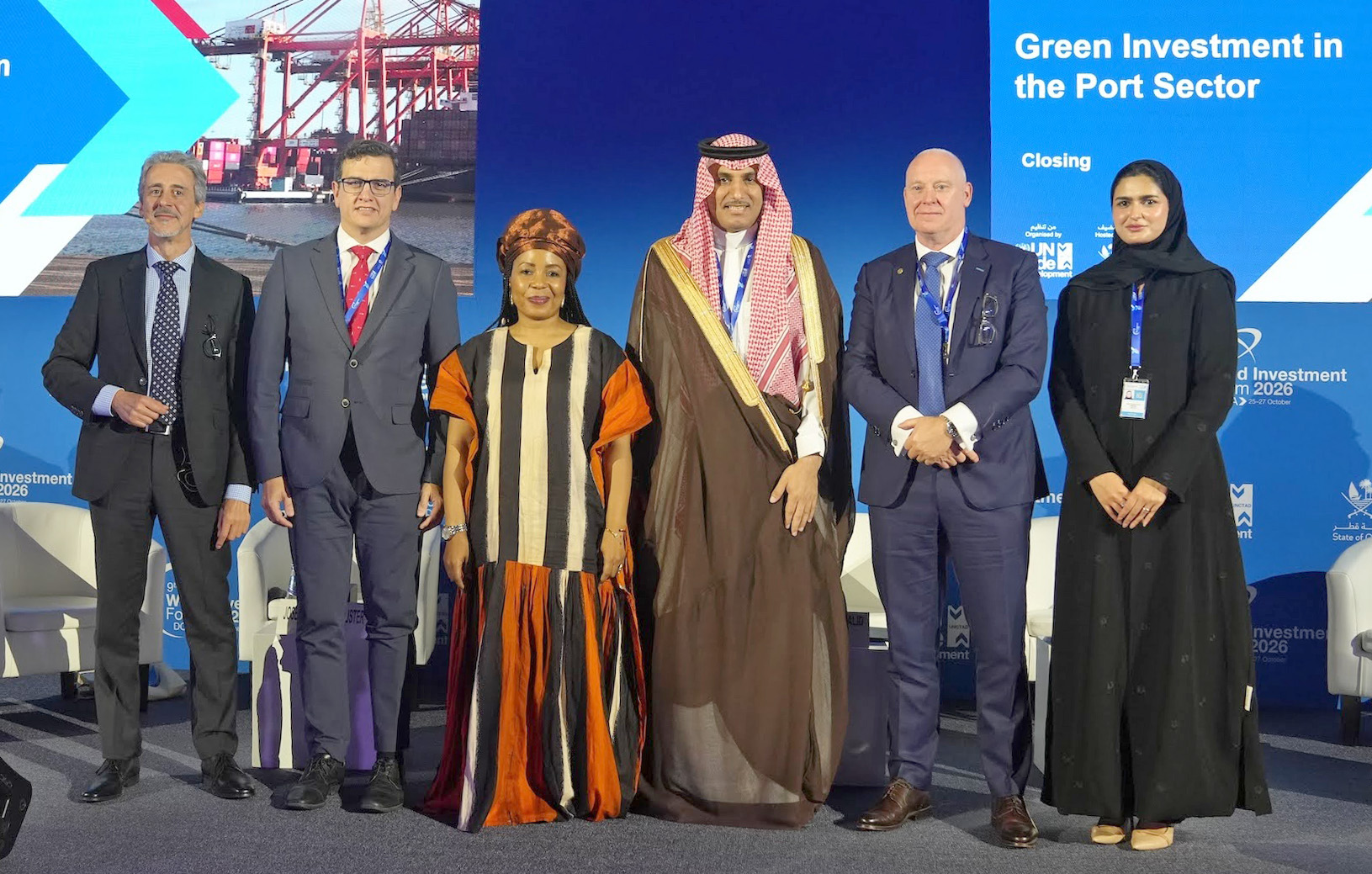
This was the key message from TrainForTrade’s session “Green Investment in Ports” at UNCTAD’s World Investment Forum 2026 in Doha, Qatar. The panel discussion covered investments in port infrastructure, digitalization, and energy transition.
The panelists included H.E. Eng. Suliman bin Khalid Al-Mazroua, CEO of Saudi Ports Authority (Mawani); Ms. Marleine Hilde Minko, Head of Cooperation Unit in Port of Kribi, Cameroon; Mr. José María Gómez Fuster, CEO of Port Authority of Cartagena, Spain; and Captain Paul O’Regan, COO of Port of Duqm Company SAOC. The panel was hosted by Mr. Mark Assaf and Ms. Isha Abbasi from TrainForTrade.
Capital isn’t necessarily the biggest obstacle to green port infrastructure. What holds investment back is uncertainty about future fuel demand, technology, and regulation. The answer is to de-risk, not to wait. That means phasing investments, sharing risks through public-private partnerships, and building trust between ports, investors, and governments.
“I think a new era of market growth is market agility, where people start investing in uncertainty. This is a new way of looking at the market for new investors, who look not at high-risk, high-return kinds of business, but at uncertain yet sustainable returns. This is where the economics of uncertainty becomes valuable to commercial business investors”, said Mr. Khalid Al-Mazroua.
The discussion also highlighted the importance of cybersecurity, noting multiple losses from cyber incidents. This reinforces the need for stronger digital resilience across the port sector.
Digitalization is essential not only for cargo operations but also throughout the entire port ecosystem. From infrastructure and logistics to communication, security, and decision-making, connected and secure digital systems are critical to improving efficiency and supporting the green transition.
But infrastructure alone is not enough. Ports must bring their customers along on the transition and invest in people, because skilled teams are what turn green investments into green operations.
The bottom line: while port investments carry risks, green, digital, and secure projects are increasingly supported by compelling business cases.