

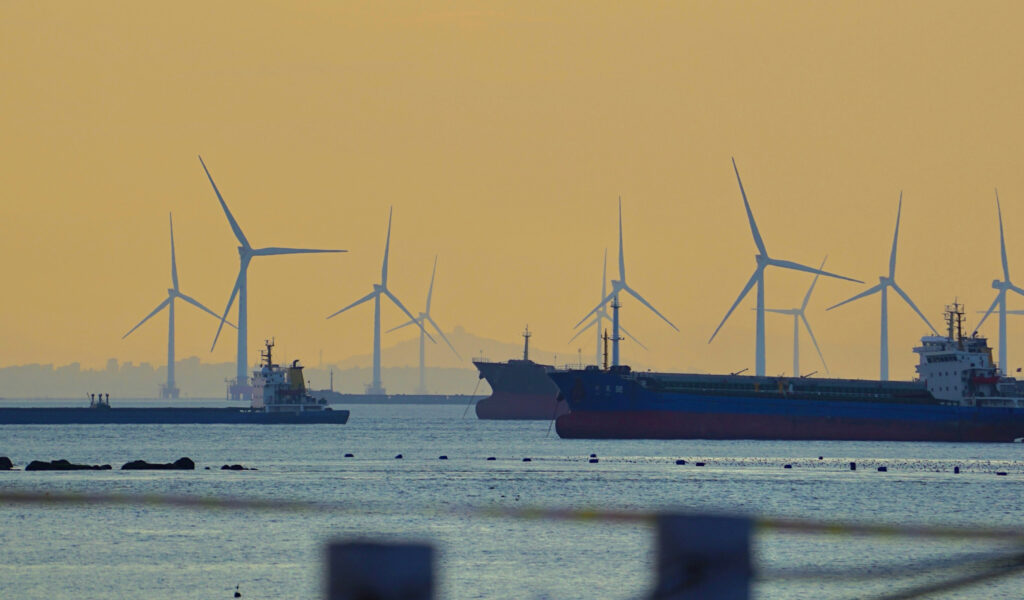
TrainForTrade supports port professionals through new training focused on practical solutions for cleaner and more efficient port operations.
Ports are under growing pressure to adapt to the energy transition, as cleaner shipping, new fuels, and changing regulations reshape maritime trade.
The maritime sector accounts for about 2% of global energy consumption, with almost all ship fuel still coming from fossil sources. Port operations produce a smaller share of emissions but play a critical role in enabling cleaner shipping.
For UN Trade and Development (UNCTAD), the transition is not only an environmental priority. It also brings economic, health, and social benefits – helping ports secure a more competitive and sustainable future while strengthening their role as engines of global trade.
Training future-ready port communities
UNCTAD’s TrainForTrade programme has introduced a new online course on Energy Transition in Ports (ETP). The course covers methodologies, technologies, case studies, and best practices to help port communities develop lower-emission operations.
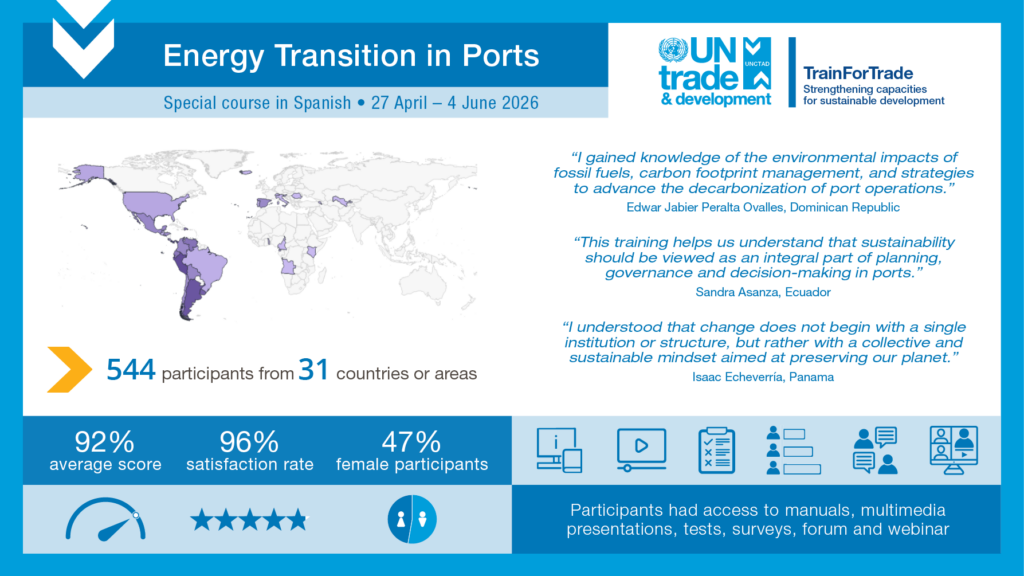
The first edition of the ETP course, delivered in Spanish between April and June 2026, brought together 544 participants from 31 countries, with women representing 47% of the cohort.
“Ports are not just energy consumers; they can also serve as energy hubs. It’s crucial to develop collaborative environments and encourage information sharing and synergies among various stakeholders across ports”, says Mr. Gonzalo Ayala, Knowledge Management Officer in TrainForTrade.
“The energy transition also aims for greater energy independence, enabling lower prices for renewable energy technologies”, Mr. Ayala says.
“This training shows that sustainability should not be seen only as an environmental obligation, but as a core element of planning, governance, and decision-making in ports,” said Sandra Asanza, a participant from Ecuador.
She said the course helped participants focus on practical steps, from measuring emissions to identifying energy-efficiency opportunities and improving coordination across port communities.
“I gained knowledge of the environmental impacts of fossil fuels, carbon footprint management, and strategies to advance the decarbonization of port operations. I will apply this knowledge to promote energy efficiency and sustainable practices in my professional environment, contributing to emissions reductions and the sustainable development of ports”, said Mr. Edwar Jabier Peralta Ovalles from the Dominican Republic.
From training to action
UNCTAD will build on the course with a workshop in Argentina in October 2026, where selected participants will present concrete solutions and share best practices for advancing the energy transition in their ports.
The initiative is part of TrainForTrade’s longstanding Port Management Programme, which has trained more than 13,500 port professionals across 183 countries and territories since 1996.
The programme supports port communities in improving efficiency, boosting trade flows, enhancing resilience and advancing sustainable development.
Photo: Unsplash/ Li Yingfeng