

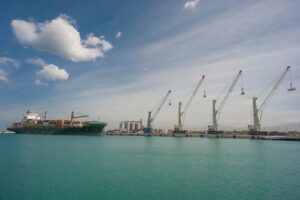
16 of October 2026. Cap-Haïtien, Haiti.
The UNCTAD TrainForTrade Port Management Programme (PMP) supports port communities in developing countries in delivering more efficient and competitive port management in the future. In order to increase trade flows and foster economic development, the programme creates port networks bringing together public, private and international entities. The aim is to share knowledge and expertise between port operators and strengthen talent management and human resources development in port communities.
The PMP’s main objectives
- Strengthen institutional capacity and management efficiency of ports and related agencies.
- Promote port community participation and public-private partnerships.
- Enhance the competitiveness of ports and the quality of their services.
- Improve the environmental sustainability and social responsibility of ports.
The PMP provides technical assistance in various areas, including port planning, management and operations, logistics and supply chain management, port security, safety and environmental protection, and legal and regulatory frameworks. It also organizes training courses, workshops, and seminars, as well as conducts research and analysis on port-related issues.
Programme outline
As part of the activities of the French-speaking network of the TrainForTrade Port Management Programme (PMP), a trainee from the second cycle of Haiti’s port community will present his case study online on 16 October 2026 at 7 p.m. (Geneva time), before a jury composed of representatives from African member countries of the network.
The trainees completed the course on Modern Port Management (280 hours). The full cycle spanned a period of approximately two years, with each of the eight one-week modules delivered every two to three months. At the end of the cycle, the trainees prepared business reports consisting of case studies addressing a real problem or opportunity within their port community and providing concrete and actionable recommendations. The case study defence forms part of the certification process of the UNCTAD/TrainForTrade Port Management Programme. The certificate will be awarded to trainees who have completed all eight modules and successfully defended their case study.